

River levels of New Mexico’s Rio Grande are dynamic.
Why Do Water Levels Fluctuate?
The Rio Grande is one of the longest continuous rivers in the United States. Born in the deep snows of southern Colorado, it provides water and recreation for Colorado, New Mexico, and Texas. The winter snowpack determines how much water fills the river in the spring. Every year, that amount is different. Other factors, such as water rights for irrigation and municipal water, affect that flow.
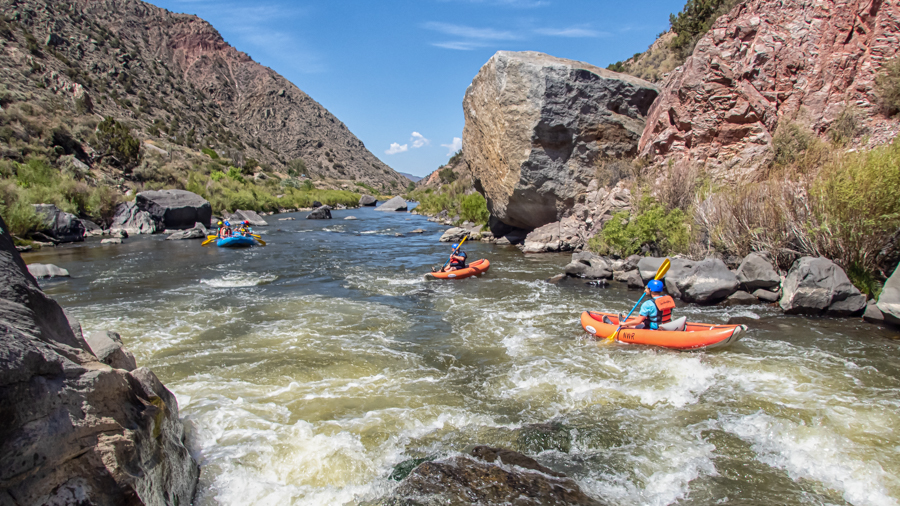
The late summer water level at Big Rocks Rapid.
How Do Different River Levels Affect Your Trip?
Rafting conditions depend on just how much water flows through the river canyon. Water levels tend to be higher throughout the spring and into the summer. In some years, our monsoon season in July and August can also raise levels. For those seeking the highest adventure level, the early season of May and June can provide the thrills and chills and the best whitewater excitement. Further into the summer, the river becomes lower and produces the best whitewater fun for families and kids. Summer fun includes piloting your inflatable kayak or funyak through the scenic parts of the canyon. The Racecourse, so named for the annual Mother’s Day race event, becomes technically challenging through medium size rapids. Here, your guide will pilot you through Albert’s Falls, Herringbone, The Narrows, Big Rocks, and Souse Hole!
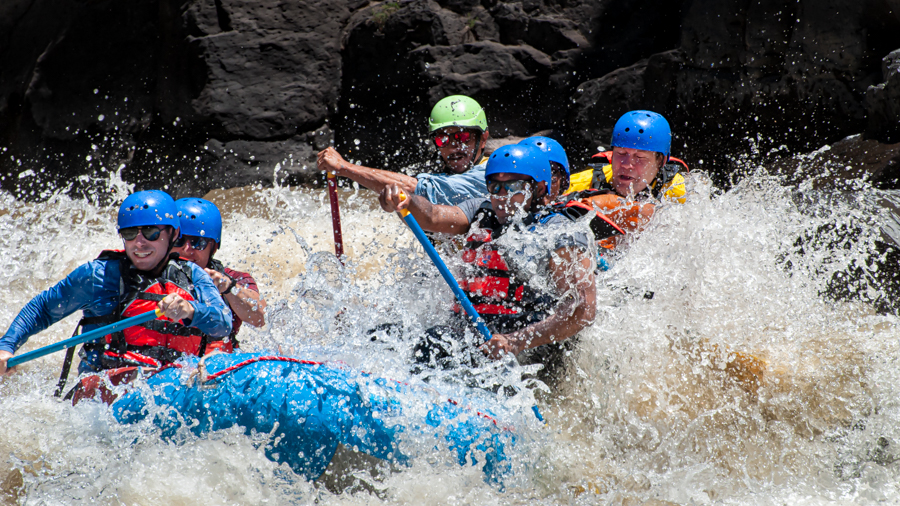
Early spring high water of the Taos Box.
SEE YOU ON THE RIO!
(images courtesy of BrittRunyonImages)


