

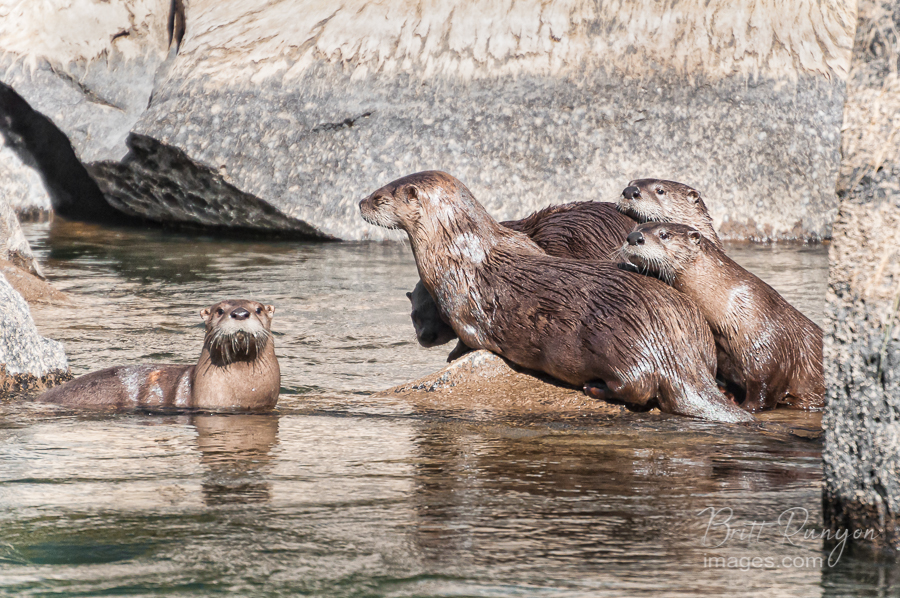
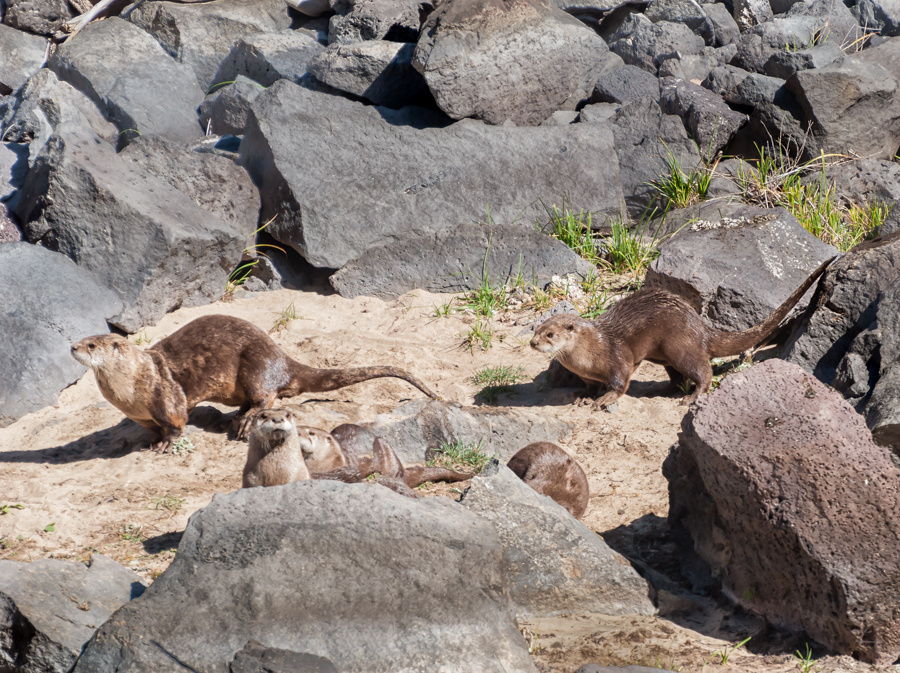
The newly relocated otters (Lutra canadensis) came from Abbeville, Louisiana. With the help of Louisiana Department of Wildlife and Fisheries and trapper Ryan Schaefer, who removes nuisance otters on crayfish farms. Seven were release north of the Rio Grande Gorge Bridge and and two in Diablo Canyon, north of Santa Fe. The Bureau of Land Management, Taos field office assisted in the relocation process. Based on the occasional eyewitness reports from interested citizens and river rafters (that’s us), people know the otters are doing very well. For instance they’ve been seen all over the Wild Rivers area of the national monument, near Pilar, through Velarde. Also as far south as Cochiti Reservoir.
They are built for swimming – having a streamlined body, short legs with webbed feet, dense fur to keep them warm, a tapered tail, small ears, and nostrils that can close underwater.
 In fact a great trip for wildlife viewing is on New Wave’s Monument Scenic Float which starts in the Rio Grande del Norte National Monument.
Otter Fun Facts:
- Member of Mustelidae family.
- A Mustelid has scent glands and mark their territory.
- They eat fish, crustaceans, amphibians, snakes, water insects, snails, worms, small mammals, birds, eggs, frogs, turtles, and many aquatic invertebrates.
- Crayfish are their favorite meal.
- Otters can hold their breath for up to 8 minutes.
- They spend two thirds of their time on land.
- In the wild River Otters live less than 10 years.
- “Pups” is what you call the babies.
In fact a great trip for wildlife viewing is on New Wave’s Monument Scenic Float which starts in the Rio Grande del Norte National Monument.


