
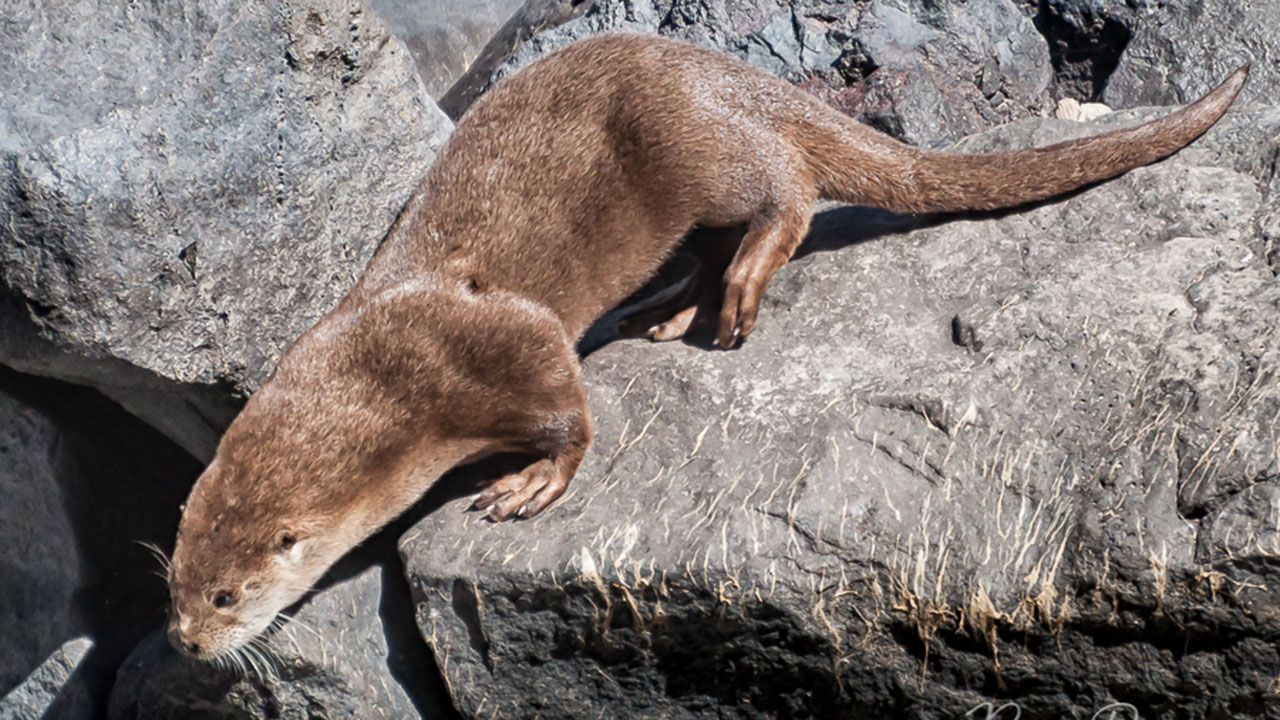
First a few fun facts
Otters (Lutra canadensis) are built for swimming – having a streamlined body, short legs with webbed feet, dense fur to keep them warm, a tapered tail, small ears, and nostrils that can close underwater.
- Member of Mustelidae family.
- A Mustelid has scent glands and mark their territory.
- They eat fish, crustaceans, amphibians, snakes, water insects, snails, worms, small mammals, birds, eggs, frogs, turtles, and many aquatic invertebrates.
- Crawfish are their favorite meal.
- Otters can hold their breath for up to 8 minutes.
- They spend two thirds of their time on land.
- The largest member of the weasel family.
- In the wild River Otters live less than 10 years.
- “Pups” is what you call baby otters.
Did you know they have the thickest fur of any animal on the planet?
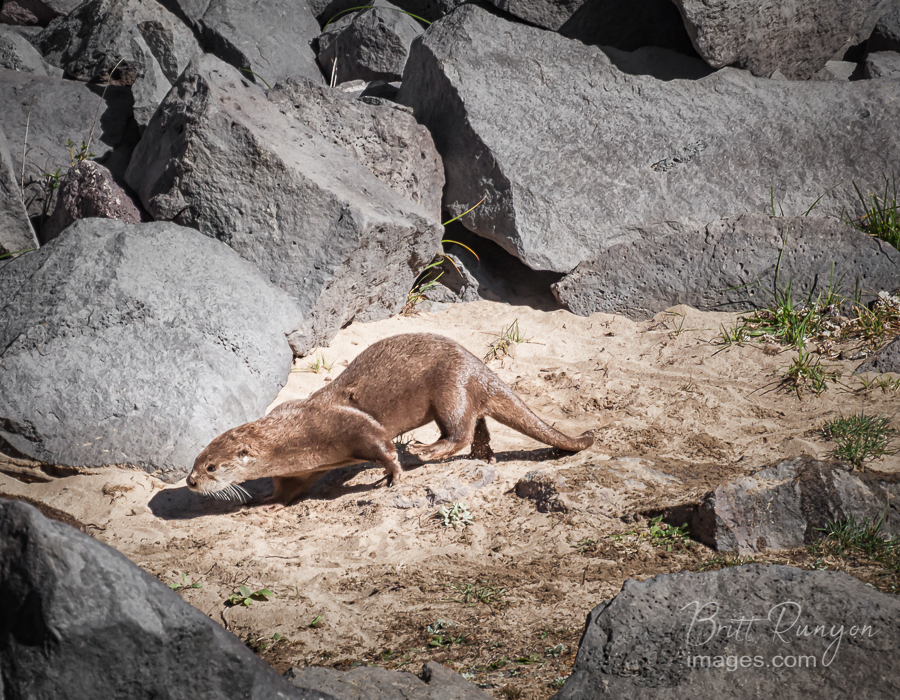
Between 2008 and 2010, 33 were released in the Rio Grande del Norte National Monument.
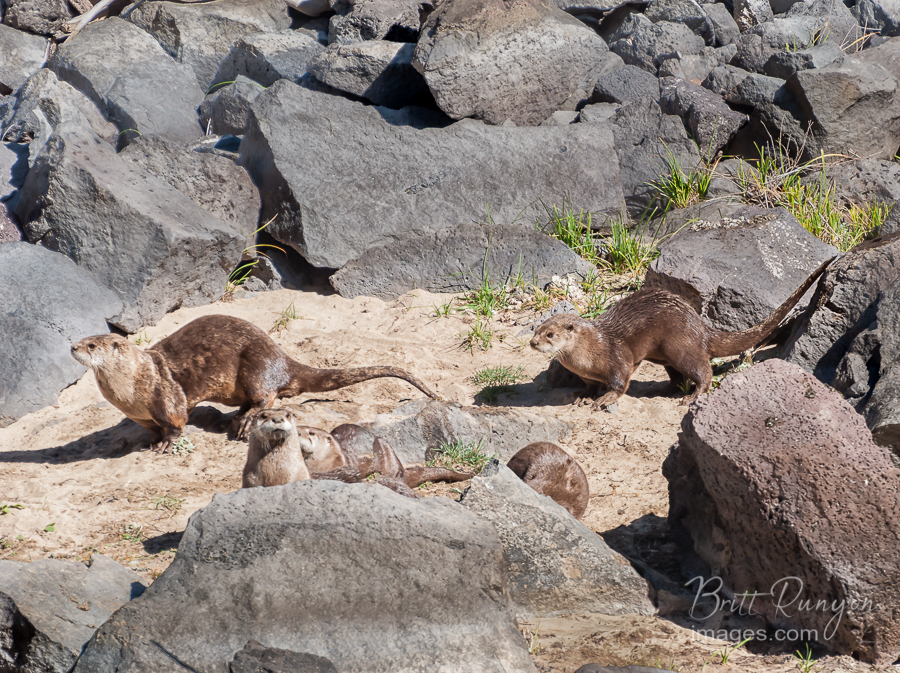
Captured in the estuaries of the Pacific Northwest, they were party animals and as a result labeled “problem otters”, for rudely leaving shells and scat on local boats and boat docks. However, we don’t mind these “party animals’ one bit.
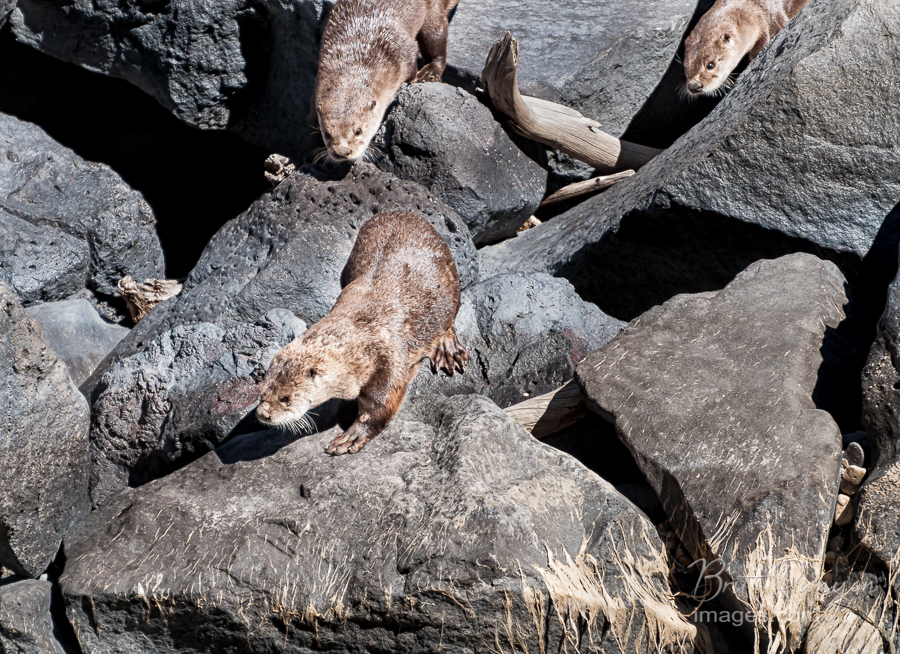
So I suppose it’s OK for them to leave their scat and left-overs amongst the boulders of the Rio Grande.
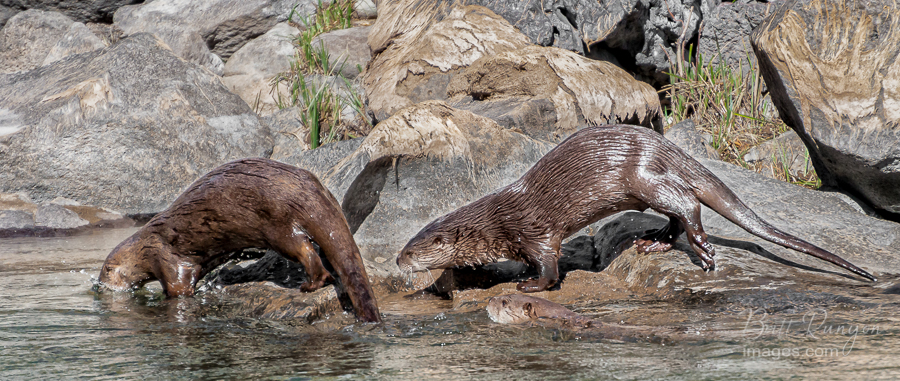
In addition, their scat makes for a great conversation piece at our lunch stop while on our full day trips.
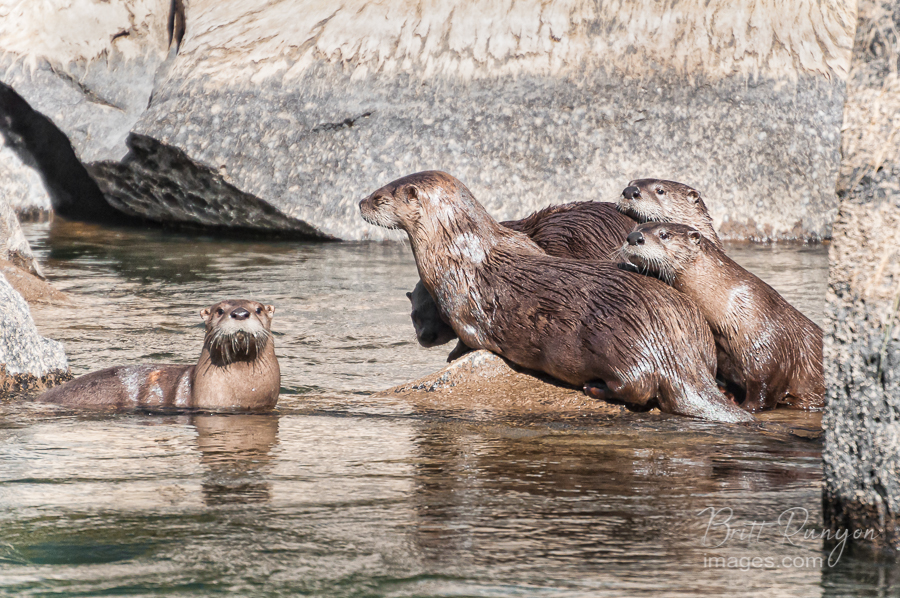
The above images were taken on a 2 day rafting excursion down the Taos Box. This family of five was such a pleasure to watch as they marked their territory, rolled in the sand, loped over the boulders and swam amongst the rocks of the Rio Grande.
Here are the links to our low water, October 2019, 2 day Taos Box rafting adventure. Day 1 Day 2


